I've been making art for decades — painting, drawing, studying formally, dropping it, and returning. Art has never felt separate from the rest of life. To me, thinking about cosmology, about consciousness, about the nature of things, is itself an artistic pursuit. Life is art. Nature is an artistic expression. The practice has always moved between those registers without needing to choose between them.
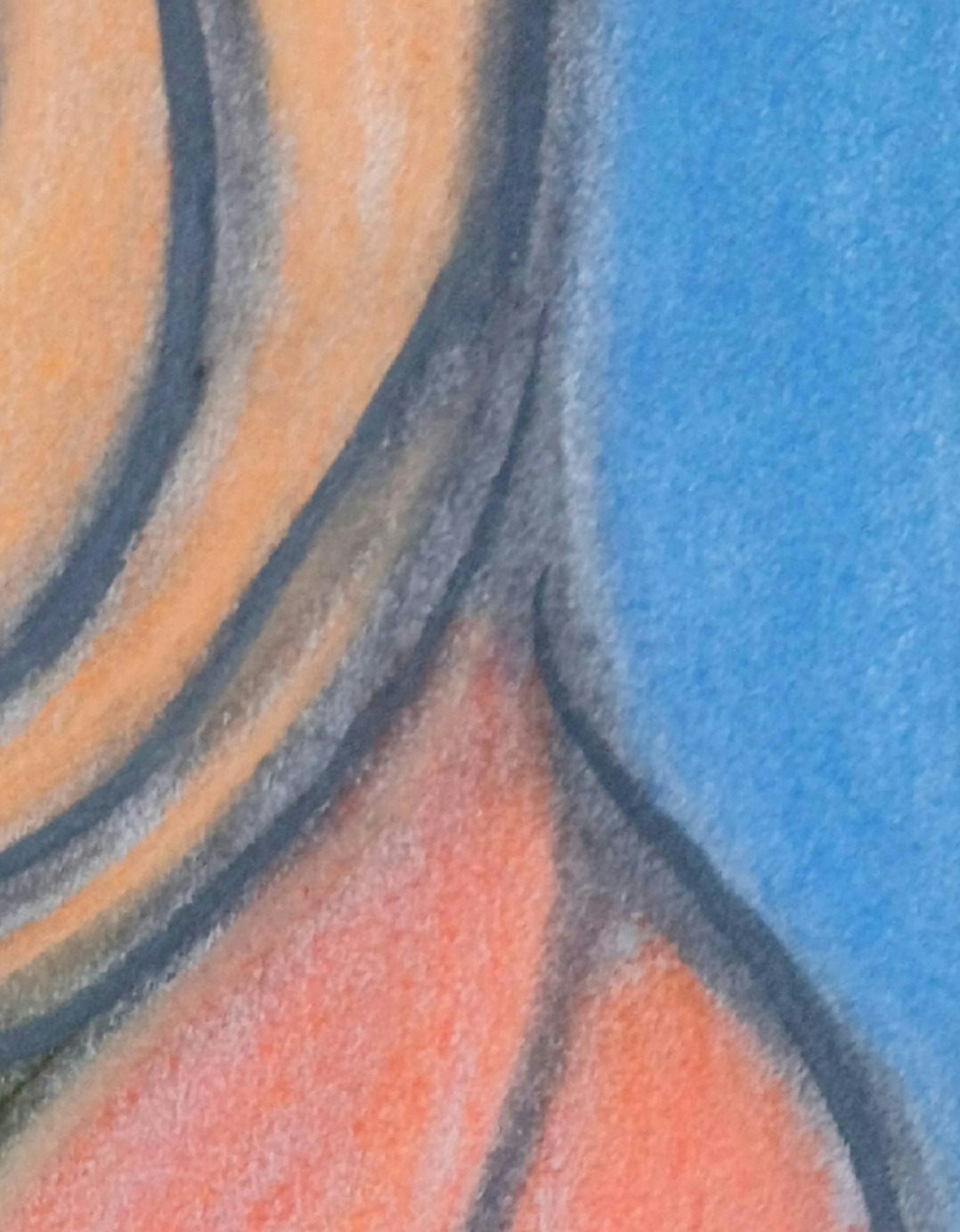
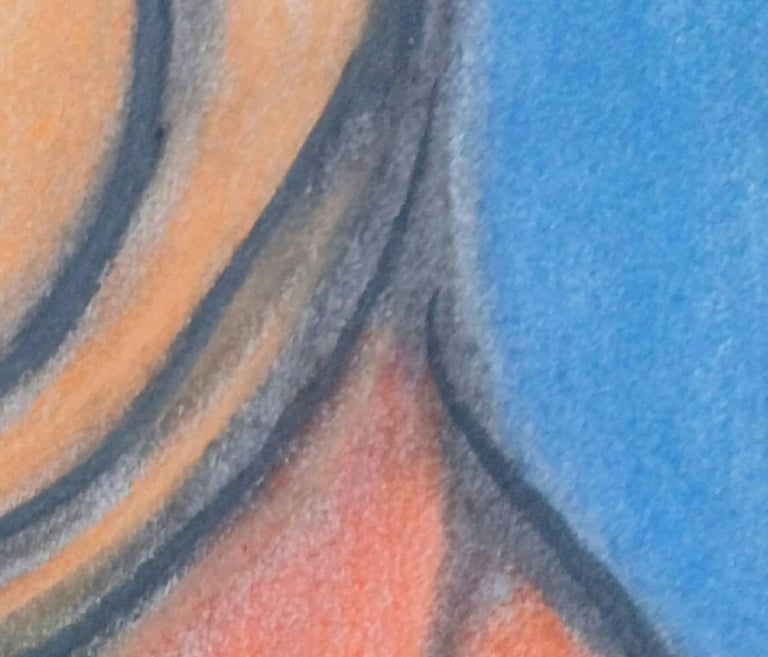
I like to work without a finished image in mind. Sometimes I may have an intention to use a medium in an unfamiliar way, or a process I want to follow somewhere new. But not usually a plan. Some of my best work has come from those moments of not knowing — where the painting is ahead of me rather than behind me, emerging from something I can't quite see yet.
The specific shape of what I do now came into focus when my tutor on the studio practice course looked through my work and asked me how I would describe it. I didn't know beyond Abstract Expressionism. So I looked more deeply — and began to notice a pattern emerging - the ambiguous multi-stability of forms.
What I've noticed is that the work often surprises me when it appears. It's unfamiliar because it never existed before — sometimes strange, occasionally unsettling. And then familiar because I was there when I made it. It looks back at me from a place I don't entirely recognise. That quality — something coming out of the making process that exceeds what was intended — is part of what the practice is about. Perception as a creative act, not a passive one.
zanda artist
I live near Forres in northeast Scotland. I spent many years in and around Findhorn, in the landscape of the Moray coast. Its particular quality of light, the Firth, the long northern horizon — is present in the work, even when nothing in the paintings looks like a landscape.
Water has been the deepest influence. Not as subject matter but as a way of understanding how things form — through layering, erosion, emergence. The sea off Shetland. The estuary. The difference between rough water and still. These aren't metaphors I chose; they're conditions I've experienced.
The three foundations of the practice — Soft Rebellion, Mystery of Water, Transpectivism — emerged from trying to describe what was already there. Transpectivism came from that process of looking. The paintings had a quality I later identified as multistability — forms that shift depending on where you focus, how close you stand, what you bring to the looking. That quality invites you to notice the act of seeing itself, not just what is seen. That idea, held at the intersection of perception, consciousness, and artistic practice, had no word in any language I could find. So I invented one - transpectivism.
For me, Riot of Spring is the painting that opened this inquiry into a new dimension.
If you'd like to know more about what drives the work, the Practice page is a good place to start.
reach out for original artwork and projects
© 2026 Zanda All rights reserved